
Everything a specialist lender needs, in one place
Every module a bridging or specialist lender runs on, from the first enquiry through funding and risk to redemption.
Sales, underwriting and servicing at work
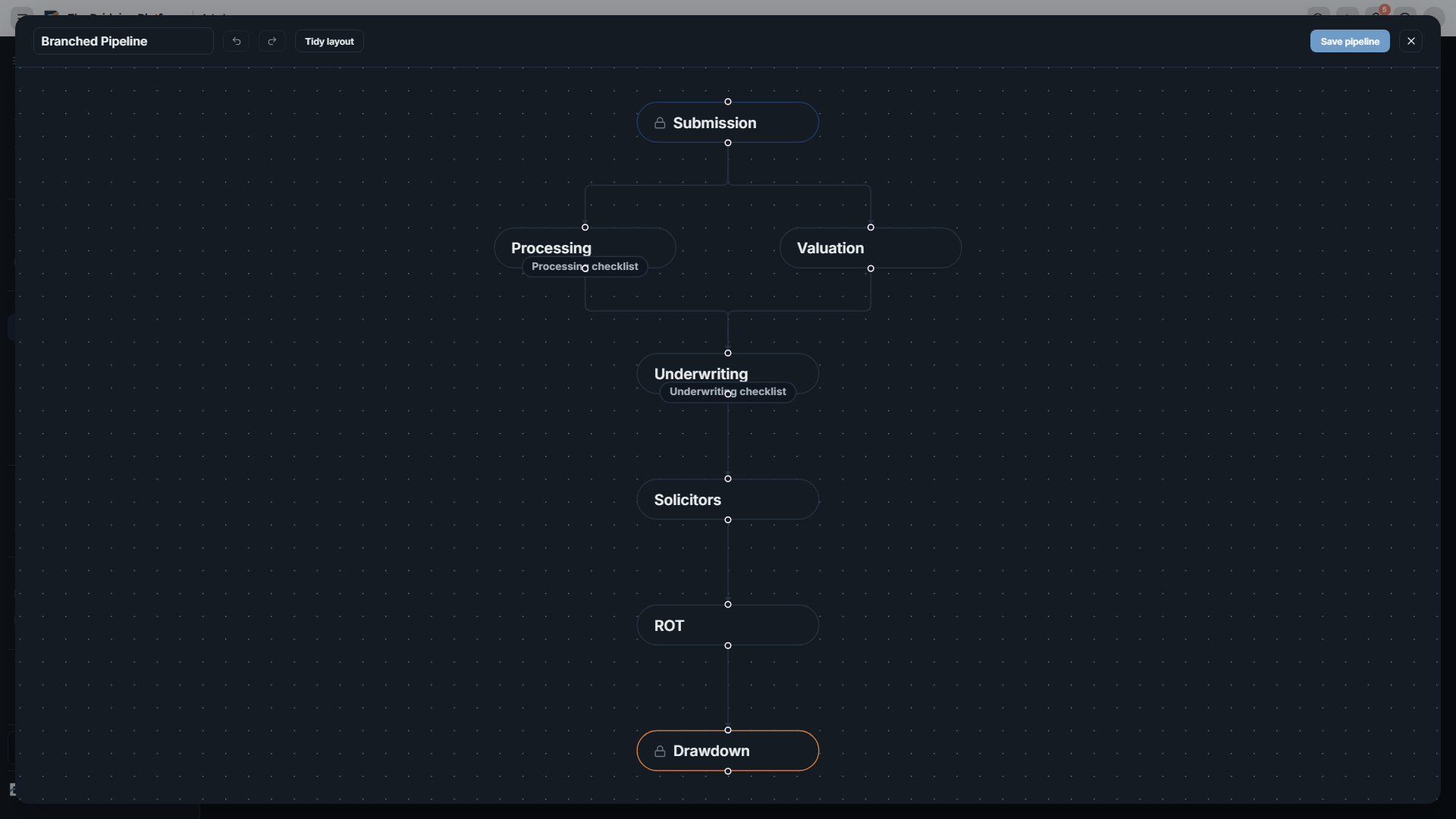
Branching, configurable pipelines
Pipelines aren't a straight line. A stage can wait on more than one thing finishing, or open several routes at once. You build them visually on a canvas, not in a config file.
- Fork a pipeline into parallel stages, then join them back once every branch is done
- Each stage has its own checklist, and the record shows what's still awaiting
- Structure locks once records are live on a pipeline, so a deal in flight never shifts
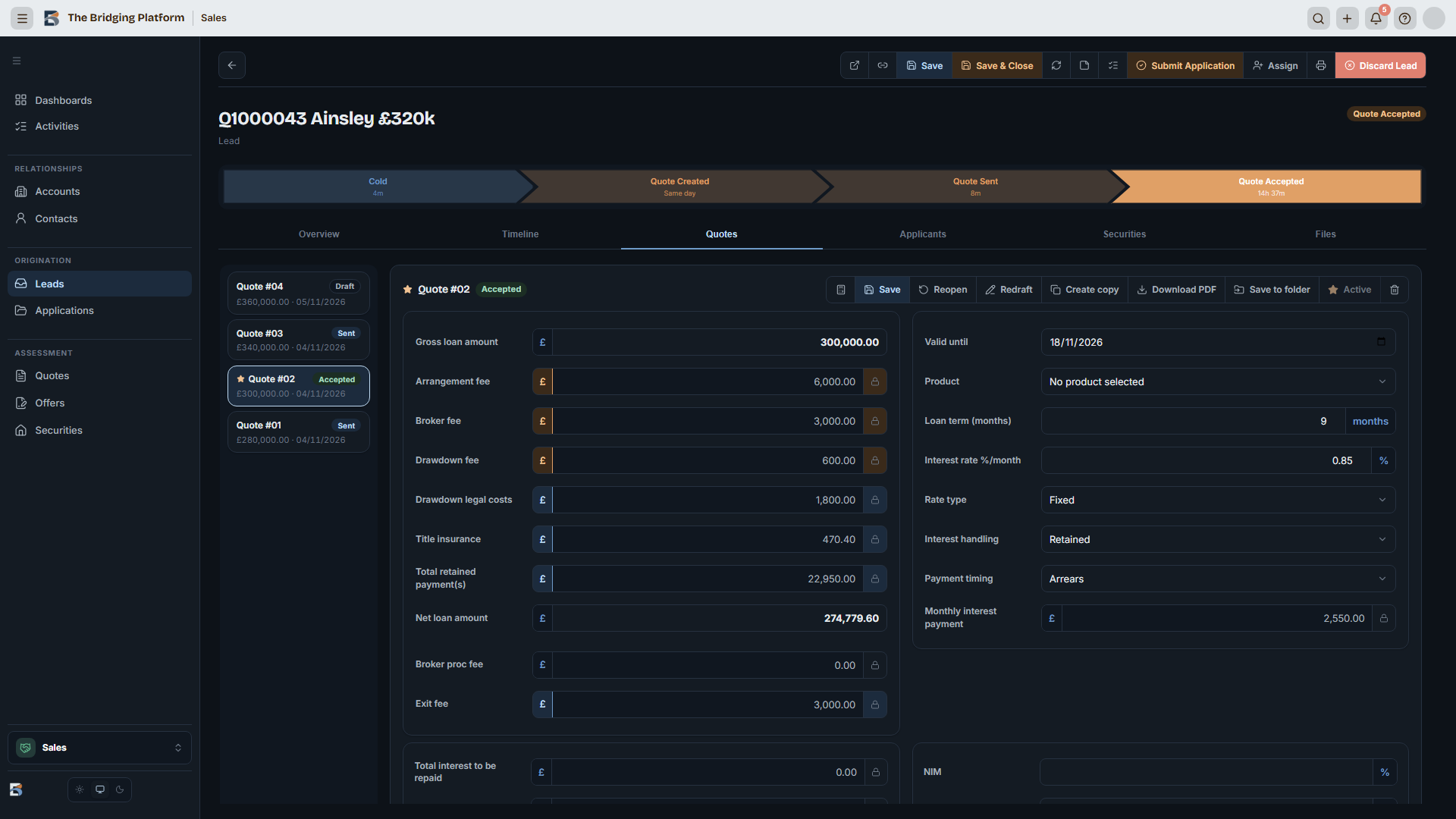
Several quotes, one lead
Requested terms, security and exit are captured on the lead itself. Quotes are fully costed, with fees, rate, term and retained interest, and sit alongside each other until one is accepted.
- AI suggestions extract applicants, securities and loan details from typed-up notes
- Nothing writes to the record automatically: every suggestion is reviewed and applied
- An accepted quote converts straight into a live application
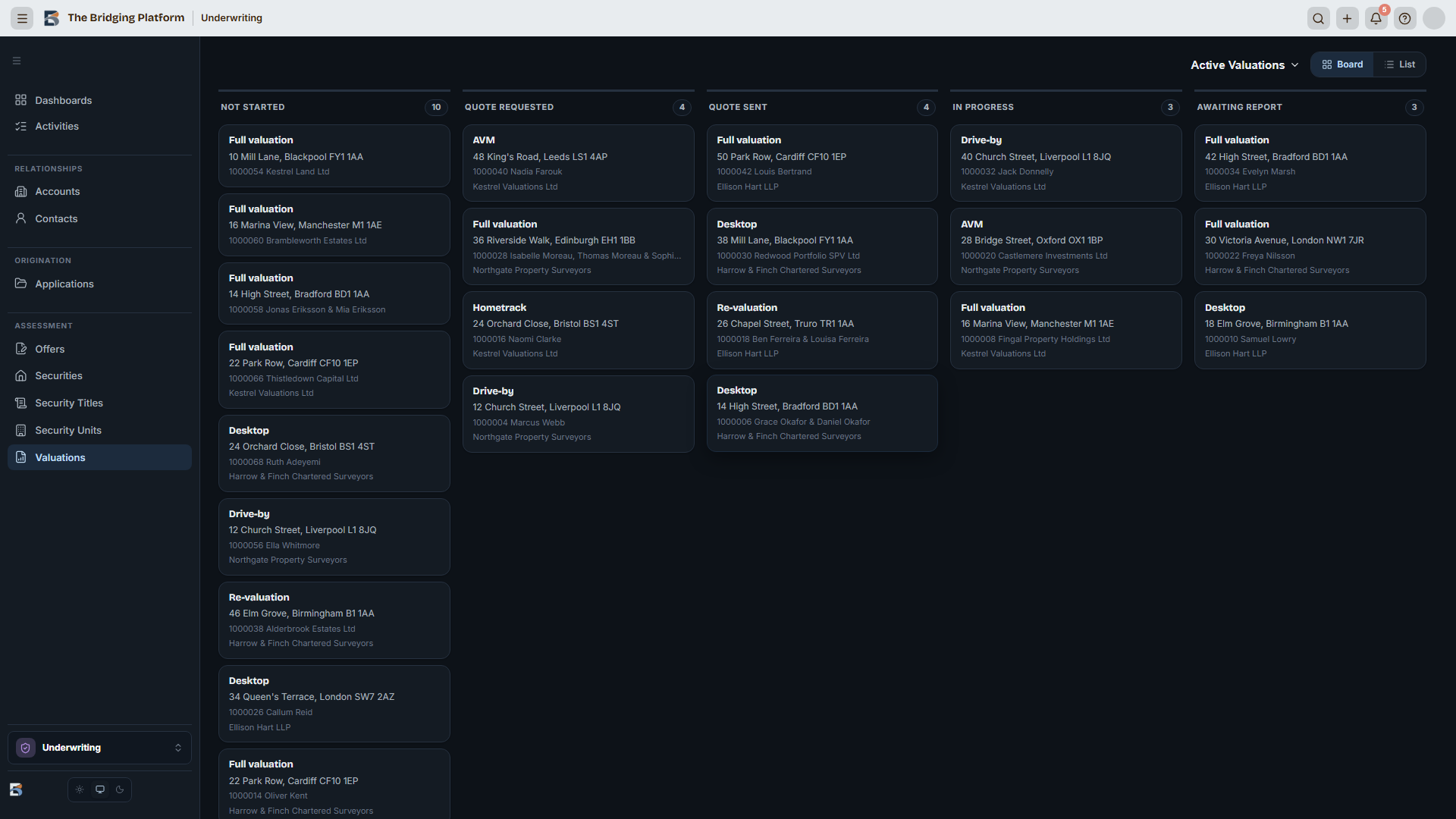
Valuations tracked from instruction to report
Instruct the valuer, then follow each valuation from quote request to report on a board of its own. Each one is linked to the property and the deal it secures.
- One board for every valuation in flight, whichever deal it belongs to
- Valuations sit against each security on the application
- A mix of full, desktop, drive-by, AVM and re-valuations, each with its own status
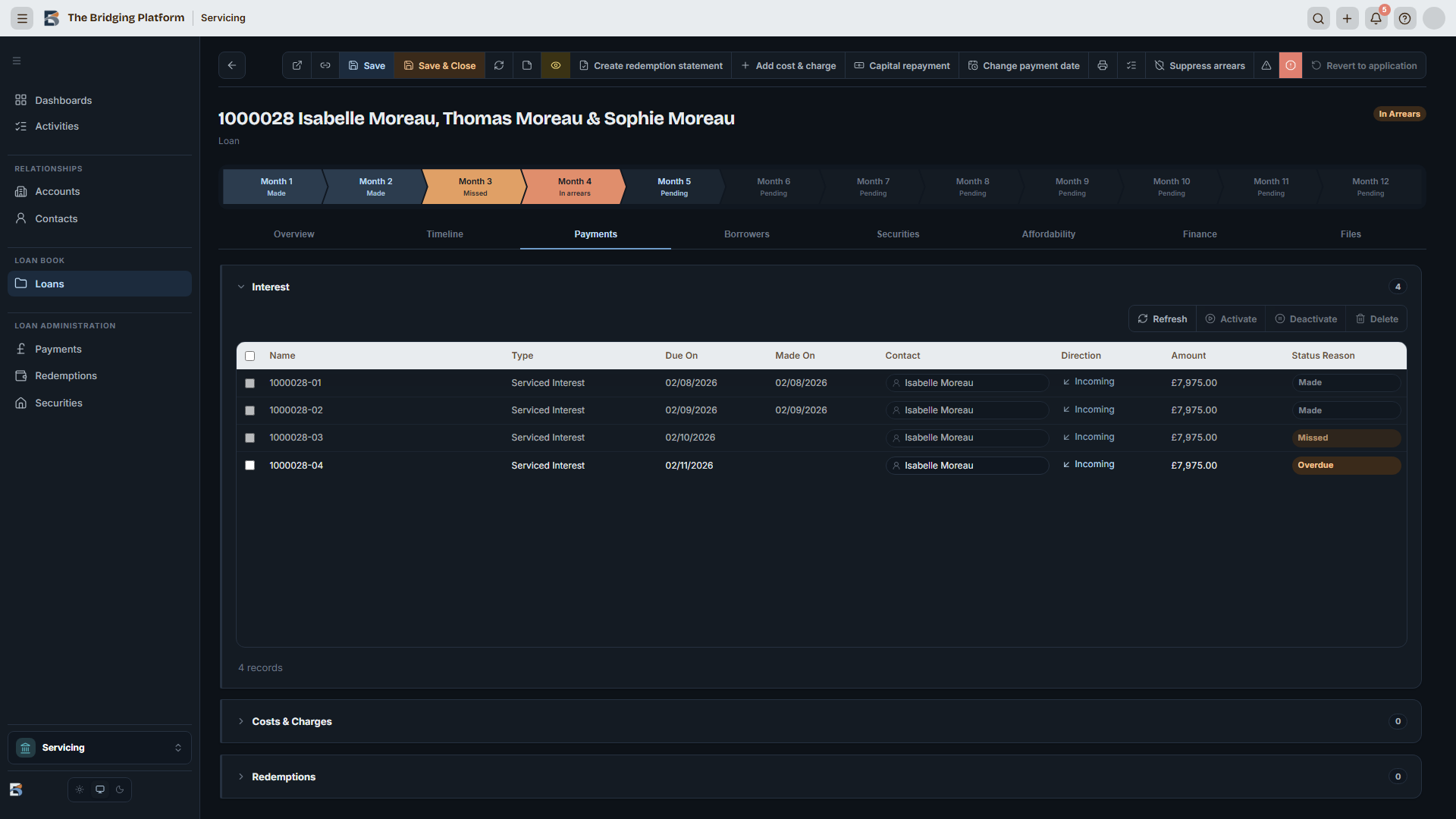
A live book, not a spreadsheet
Every live loan carries its balance, interest held and term, month by month. The payment schedule is generated on the loan and kept in step as it moves.
- Retained and serviced interest schedules, with each payment's status
- Costs and charges, capital repayments and redemption statements on the loan
- Saved views, filters and exports across the whole book
Risk scoring where the risk lives
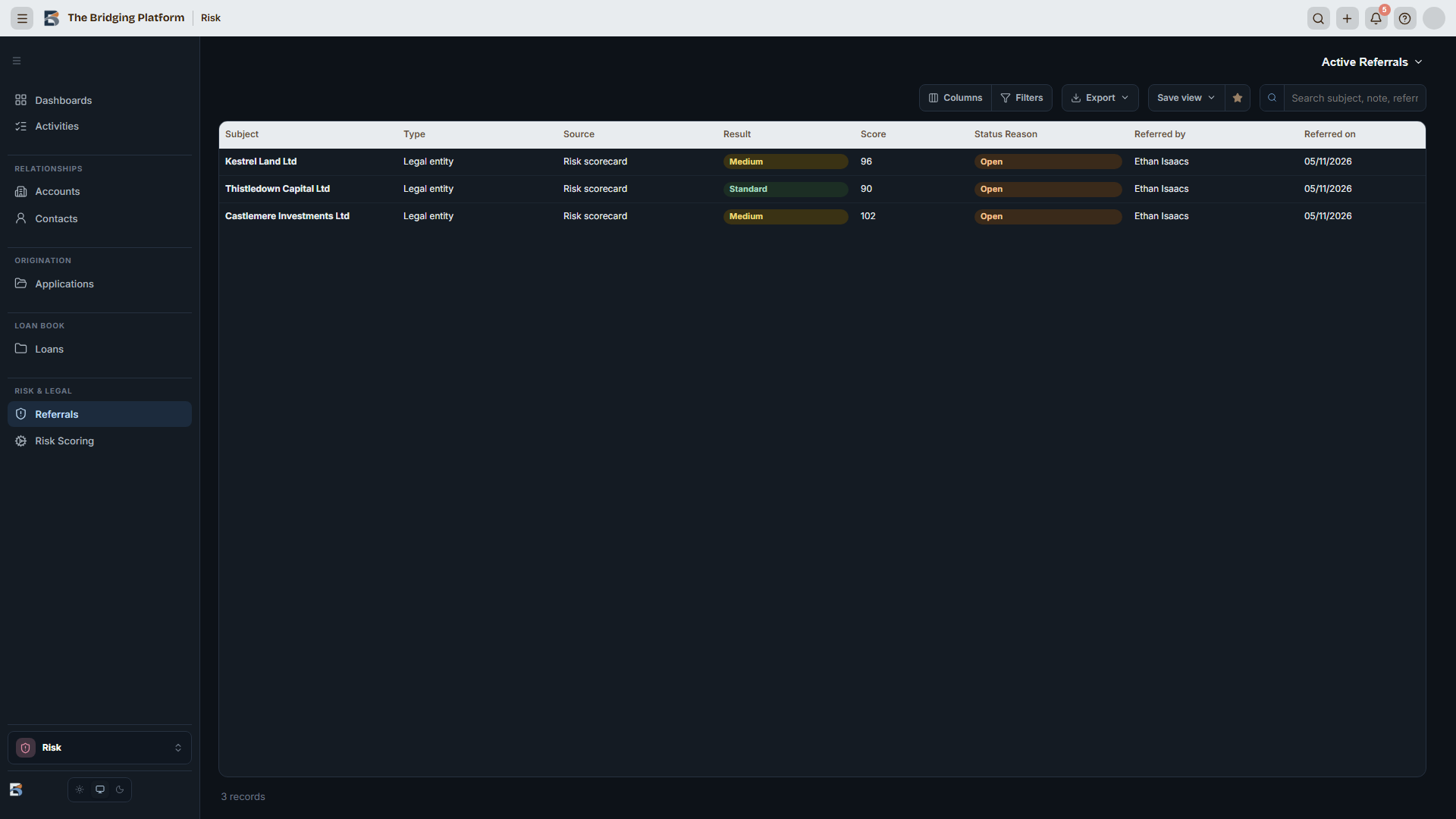
Risk scoring lives on the account and contact record itself. Anything that needs a second opinion goes into a shared referral queue, not an email thread.
- MLRO risk scorecards attached directly to accounts and contacts
- A red flag such as an adverse media match forces the rating, whatever the weighted score says
- Refer to the MLRO in one click; they resolve it from the Risk app's Referrals queue
Funding lines, modelled properly
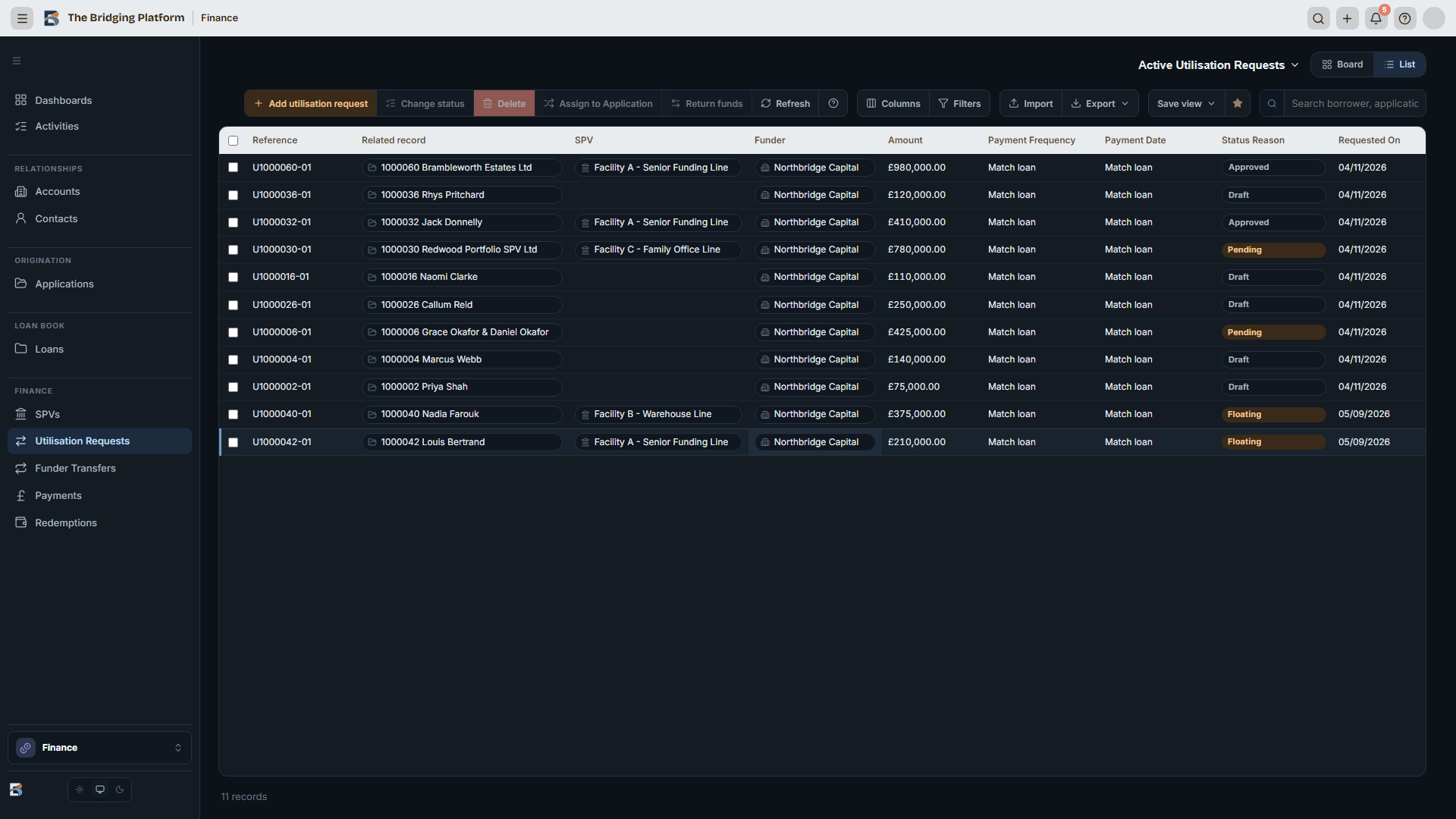
Fund loans through warehouse lines, forward flow, participation or table-funding facilities. Track drawdowns against them, and move a loan's funding to another funder if the arrangement changes.
- Several facility structures on one platform, not just one
- Utilisation requests track drawdowns against a facility, from draft to approved to funded
- A check against the deal's funding value before anything is over-drawn
Recorded calls, transcribed for you
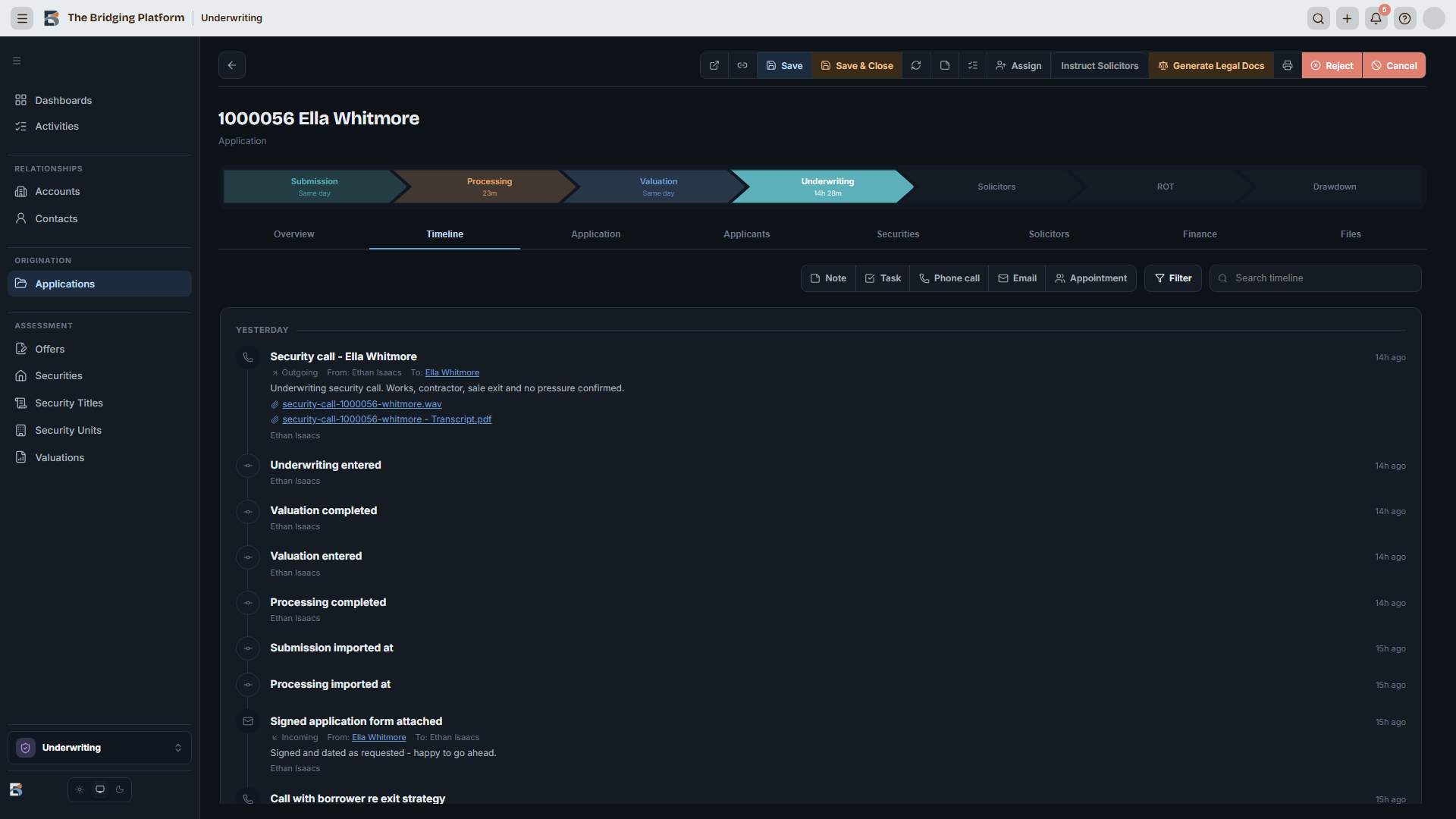
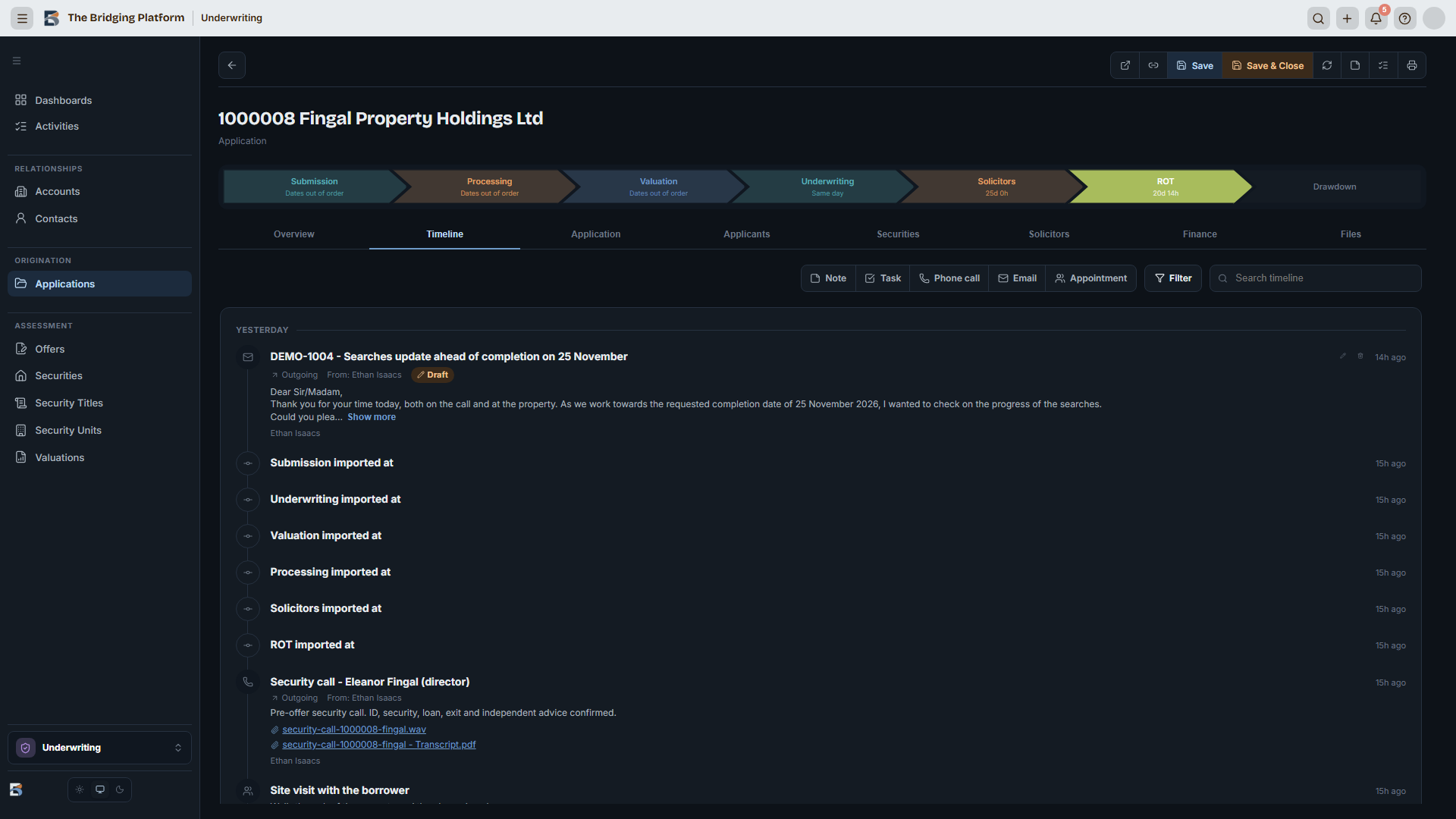
Log a phone call on the deal and attach the recording. The platform transcribes it, so ID checks, confirmations and the borrower's own words sit on the timeline next to every note and email.
- Recordings and transcripts filed on the call itself
- Notes, tasks, calls, emails and meetings in one timeline per deal
- Anyone covering the deal can see exactly what was said and agreed
Base rate changes, handled your way
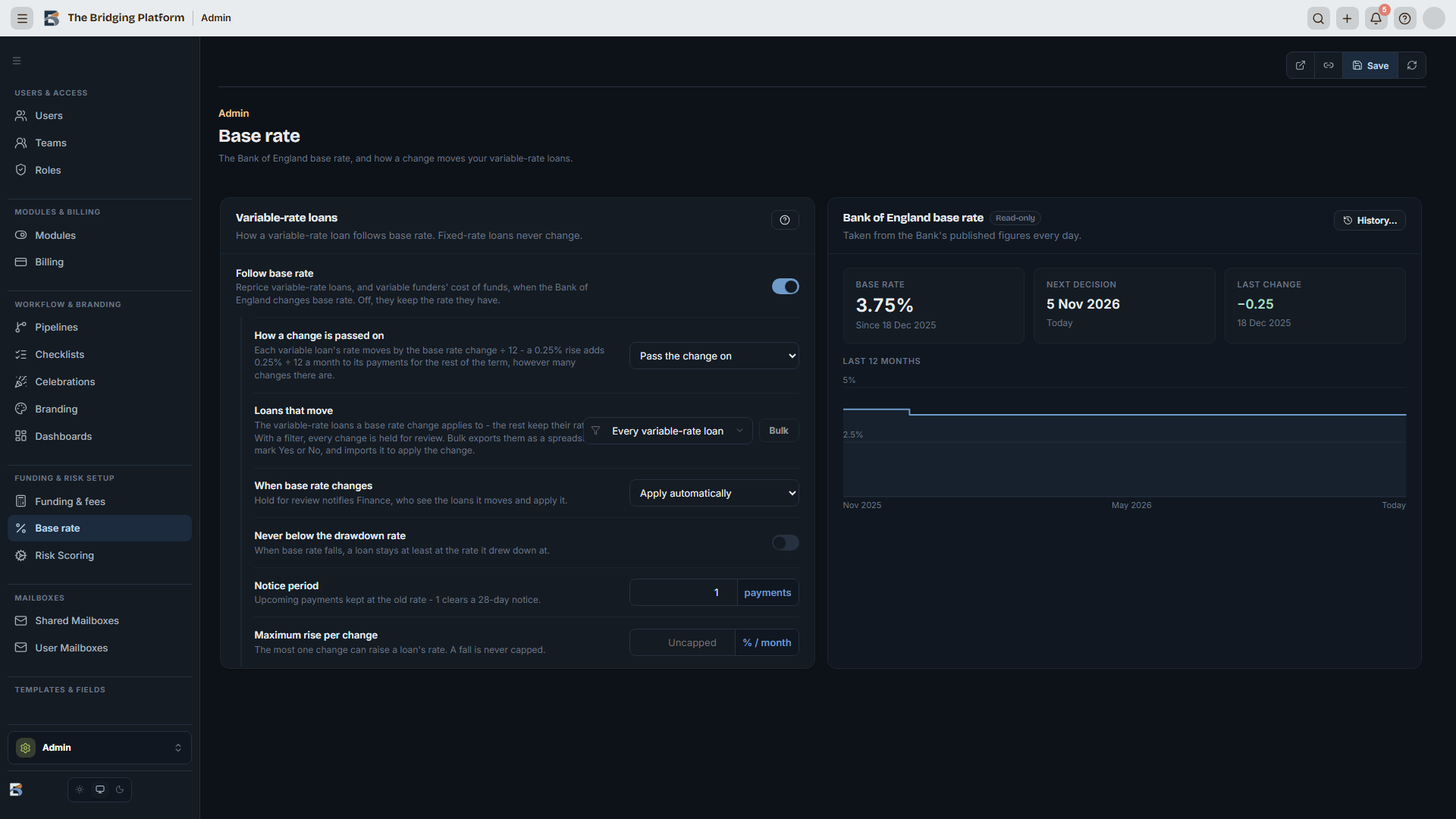
The Bank of England base rate is picked up every day. When it moves, variable-rate loans and variable funders' cost of funds are repriced by the rules you set, and every fee, product and pipeline is configured by your own admins.
- Apply a change automatically, or hold it for review: Finance is notified, sees the loans it moves, and can export them and apply it with their own rates
- Choose which variable-rate loans a change moves, with a filter or a bulk spreadsheet
- Pass the change on, or reprice to base rate plus a margin
- A notice period, a floor at the drawdown rate and a cap on any single rise
- Each loan's payments and schedule updated automatically, the borrower emailed their rate change letter and new schedule, and it's logged on the timeline
- Products, rate cards, fees and legal cost scales set in the Admin app
A first draft of the credit paper, written for you
Choose the Credit Paper template on an application and the AI writes it from everything on the record: the figures, securities, valuations, exit and timeline. Your credit team reads it, changes what they want and takes it to committee.
- Executive summary, property, borrower, valuation, loan and exit, risks and recommendation
- Laid out in your own Word template, saved as Word or PDF to the deal's files
- Written for people to review, not to replace their judgement
Chasers that draft themselves
On any open task, Draft email writes the chaser from the deal, its documents and recent correspondence, and leaves it on the timeline as a draft with a note on what it chased and why.
- Internal notes and finance-only detail are left out automatically
- Always a draft: a person reads, edits and sends it
- Signed off with your own email signature
Paperwork generated from the record
Offer letters, facility agreements and other paperwork are generated from templates, filled in from the application, valuation and security records.
- Per-category templates for leads, applications and live loans
- Merge fields stay in sync with the underlying data, so nothing goes stale
- Consistent, on-brand documents for every lender relationship
The details that save hours every week
Custom modules
Workflow unique to how you lend can be built as a module in your account, working just like the standard ones.
Temporary cover
Hand a colleague's whole caseload to a teammate for a date range. It reverts automatically when cover ends.
Role-based access
Fine-grained permissions, so each person sees exactly what their role needs and nothing more.
Built for teams
Underwriters, valuers, servicing and management each get the views, queues and permissions their role needs.
File & folder structure
Folders created automatically on every application, loan and account, with view and edit access set by role.
Automation
Rules and triggers that act on a record automatically. Your own team switches them on and tunes them, with no scripting.
See it for yourself
The fastest way to understand the platform is to use it.